

A pliego is a folded sheet. For centuries it was also how texts travelled outside the book: ballads, news or recipes on a few sheets, read before the book or alongside it. Alessandra, the novel’s protagonist, writes like that: in pliegos. This is the first to arrive by email.
My name is Carlos Rodríguez Morales and I have written a novel: El Protocolo de las Ninfas · El Libro de Alessandra. Here, answered by the person who wrote it, are the basic questions about it.
Who wrote it?
I did. It is my first novel. If you see it attributed to someone else, for example in a shared post, that is a mistake: I am its only author.
What is it about?
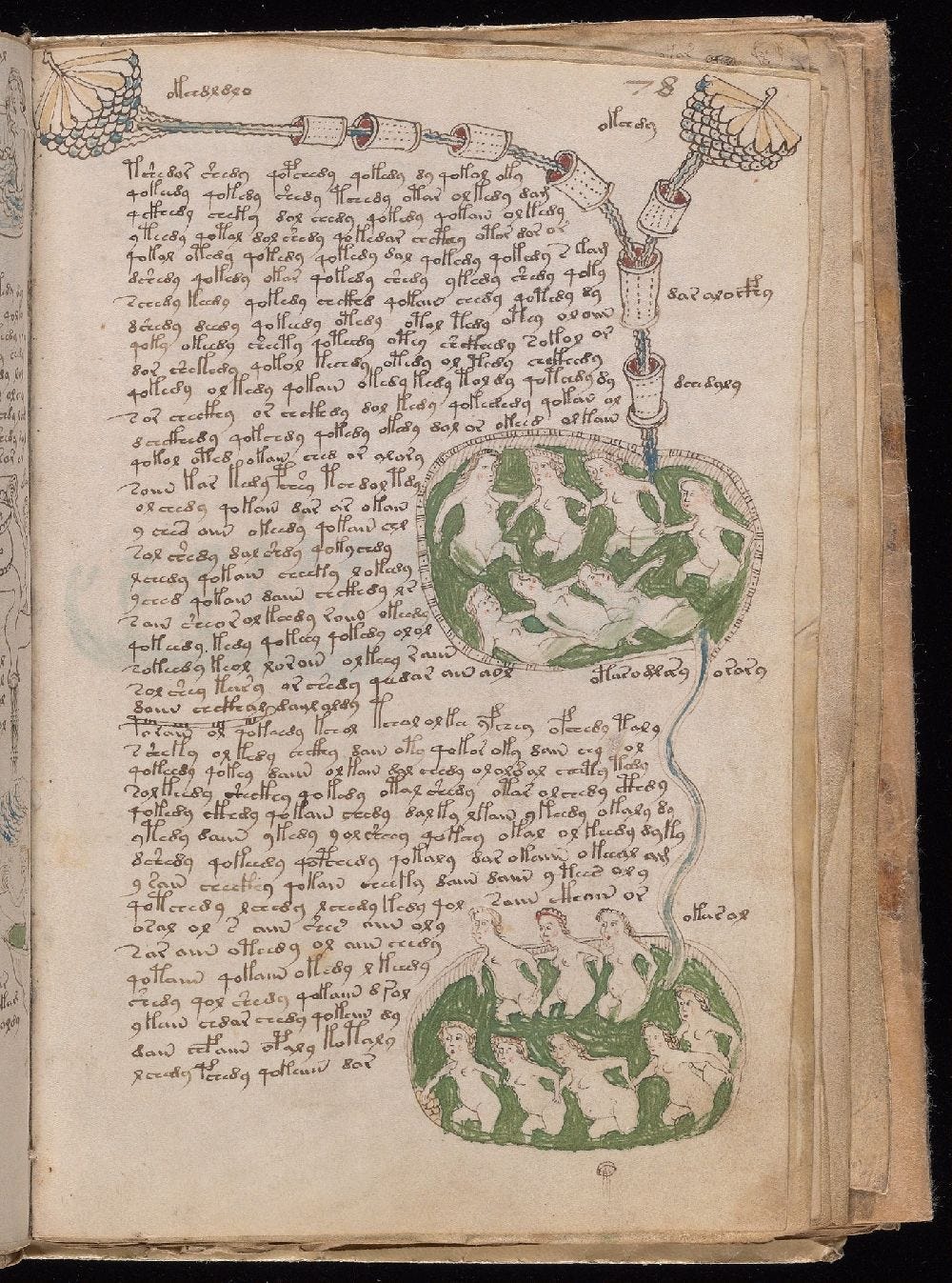
It is the story of a woman who could not sign her work, and of what she paid to protect it. In fifteenth-century Tuscany, Alessandra runs the workshop of a bathhouse. She has designed a regimen of baths that heals where the others fail, and she has neither a surname nor the right to sign it. When the Medici want to take the method, she cannot refuse and she cannot hand it over, so she writes it down in such a way that it will only answer to someone who never manages to master it. In the novel, that book is the Voynich manuscript, which is kept at Yale today. Six centuries later, in Alicante, in 2026, a systems analyst builds an emulation based on a hypothesis about how Alessandra’s system worked.
Is it a saga?
No. It is a standalone novel: one book, not a saga or a series.
Has it been published?
Not yet. It is unpublished: the novel is finished, revised and registered, and it is looking for an agent and a publisher.
Is it a book about the Voynich manuscript?
The manuscript is the vehicle, not the subject. It is neither a proposal for reading it nor a theory about it. The novel is about Alessandra: her craft, her life and what it cost her.
Did Alessandra exist?
No. She is a fictional character. The manuscript is real, and the places, people and books around her come from documents of the time.
Where can I find out more?
Here, in Letters: every month, a long pliego about Alessandra’s world (a place, a source, a craft) and, in between, the odd short note. The first ones are already in the archive: Horapollo, Savonarola’s Libreto, Lynn Conway and the folios of the manuscript. See the archive →
On the novel’s website you will find the author’s page, a folio of the manuscript looked at slowly every Monday, and the series Other Alessandras, about real works that lost the name of whoever made them. The author, on the novel’s website →
If you have just subscribed, your welcome email brings you the opening chapters, free.
Writing the story of a woman who was not allowed to sign has made me think a great deal about what it means to sign a book today. That will be the subject of a longer piece I will publish soon.
Novel · Tuscany, 15th century · Alicante, 2026