

In the novel, Alessandra writes this book so that it will only answer to someone who never manages to master it. Nothing is deciphered here: we look at what can be seen, what has been said and what is still not known.
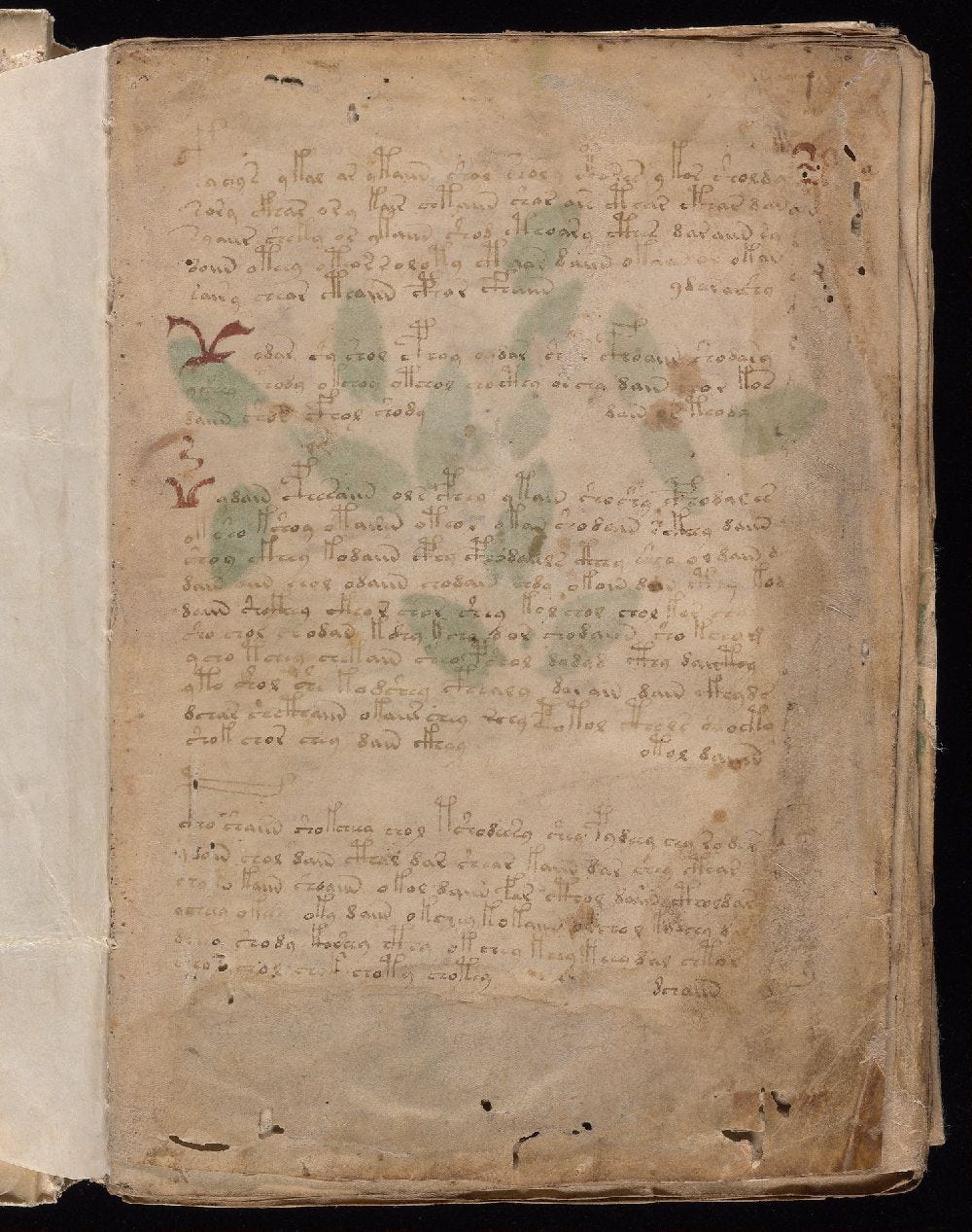
f. 1r · The first page. This is how the manuscript begins: with no drawing. Only text, four paragraphs, and in the left margin a few letters in red, as if marking where each part starts. Behind the ink, green stains show through: the plant painted on the other side, coming through the parchment after six centuries.
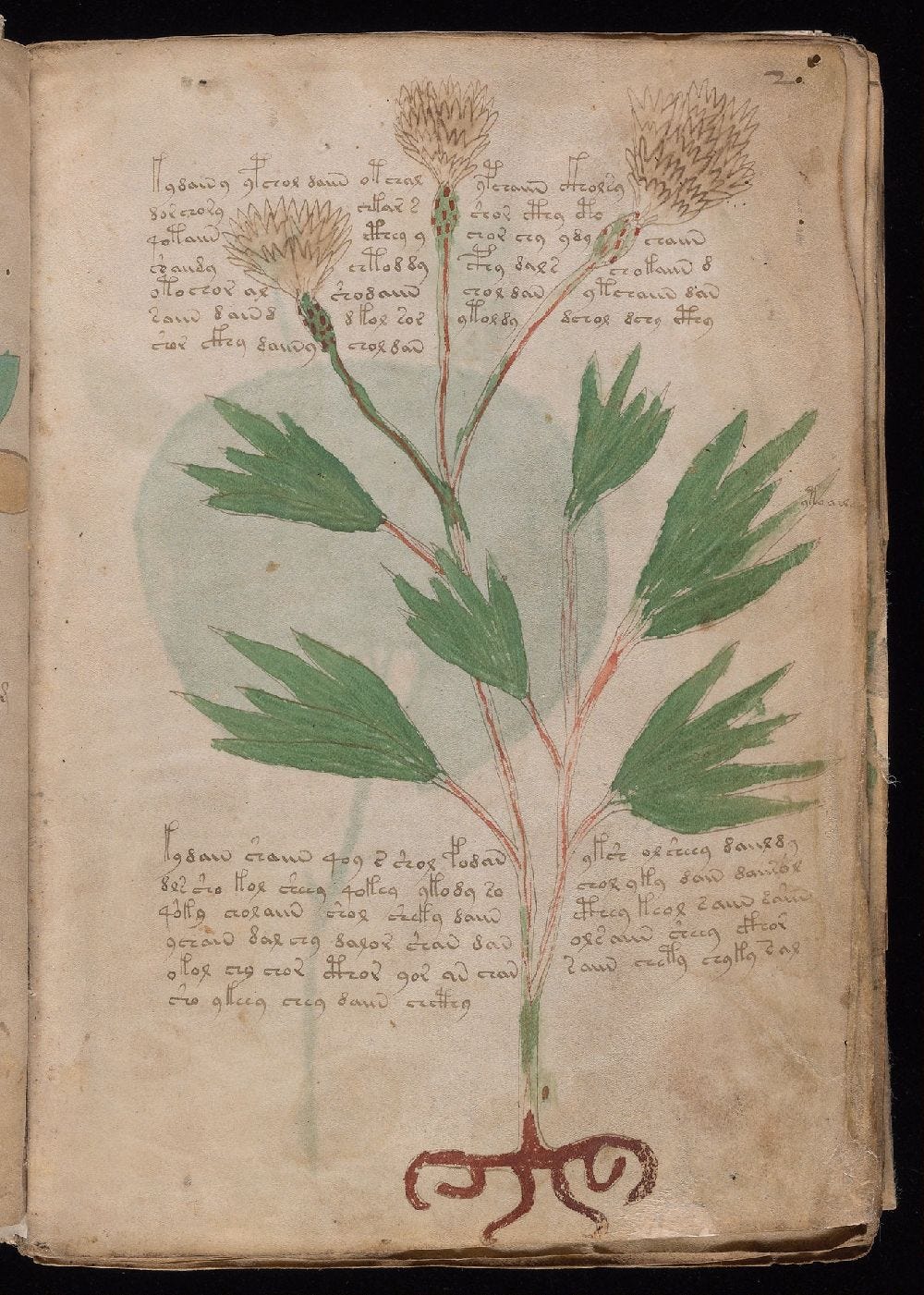
f. 2r · Thistle-like flowers. A tall plant with two flower heads that recall a thistle or a knapweed. Like almost every plant in the manuscript, it looks like several and is exactly none of them.
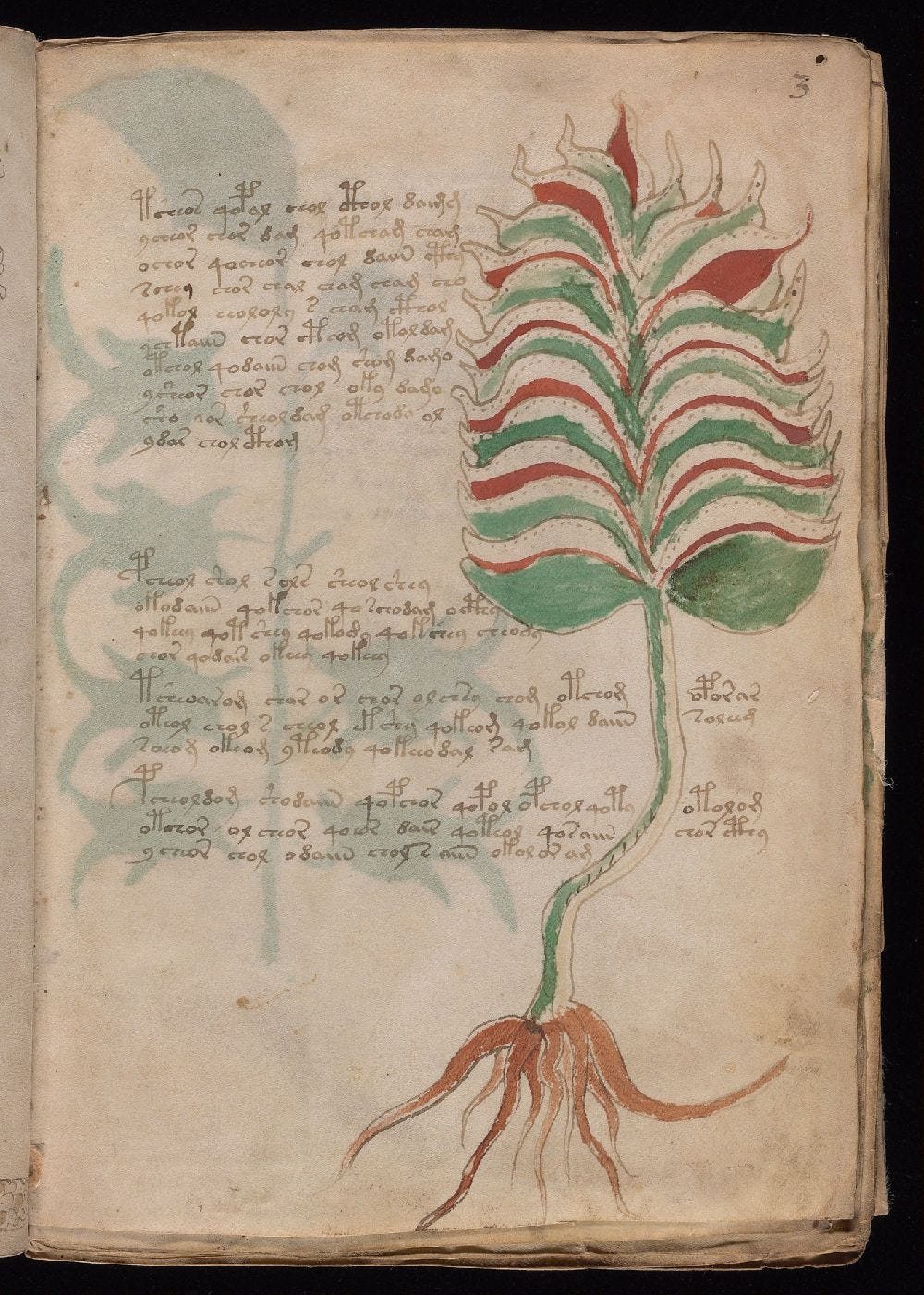
f. 3r · A plant no one can name. The leaves are painted as wavy bands, alternating red and green, and the root opens into fingers.
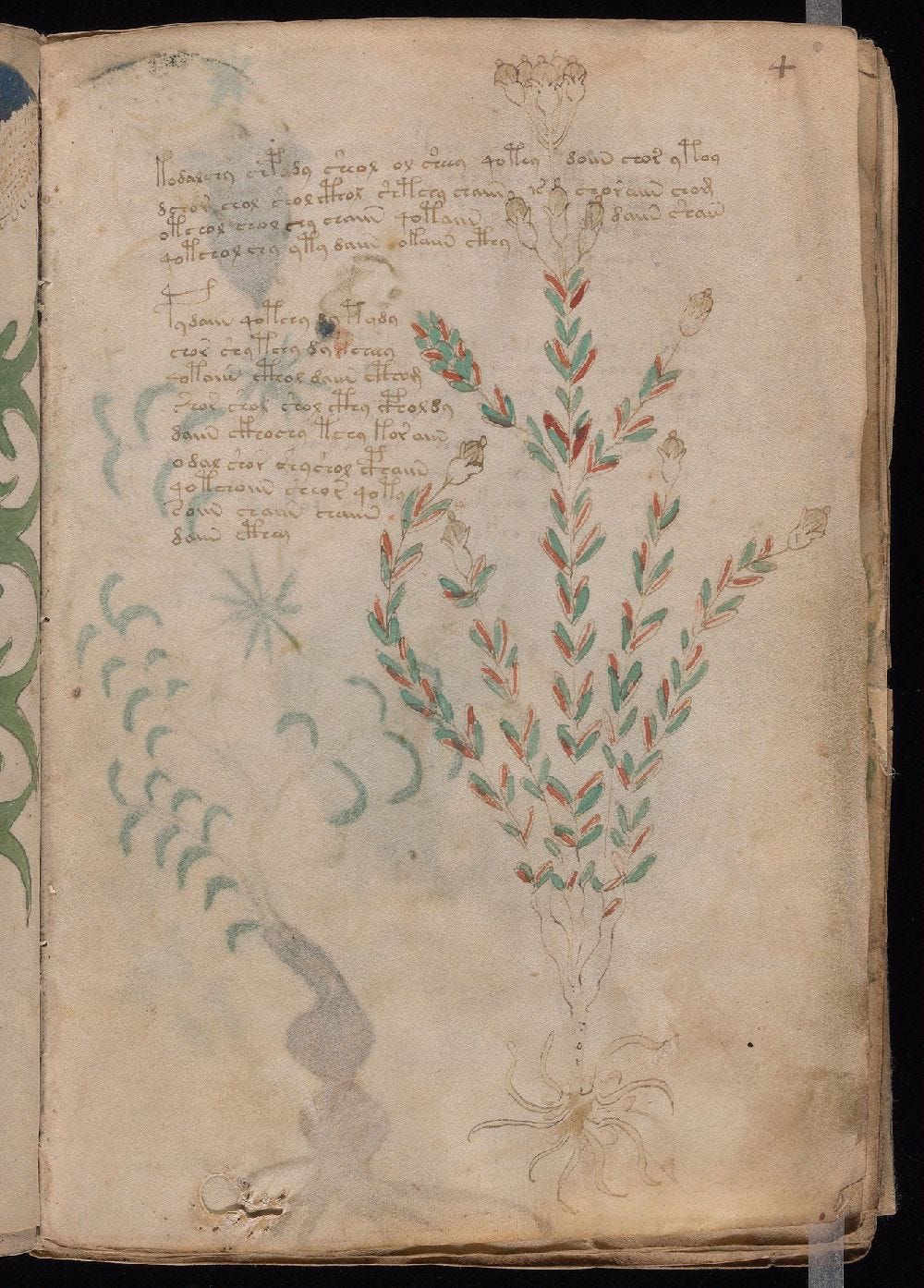
f. 4r · Red and green leaves. A thin stem, crowded with small two-coloured leaves, grows between the lines of text.
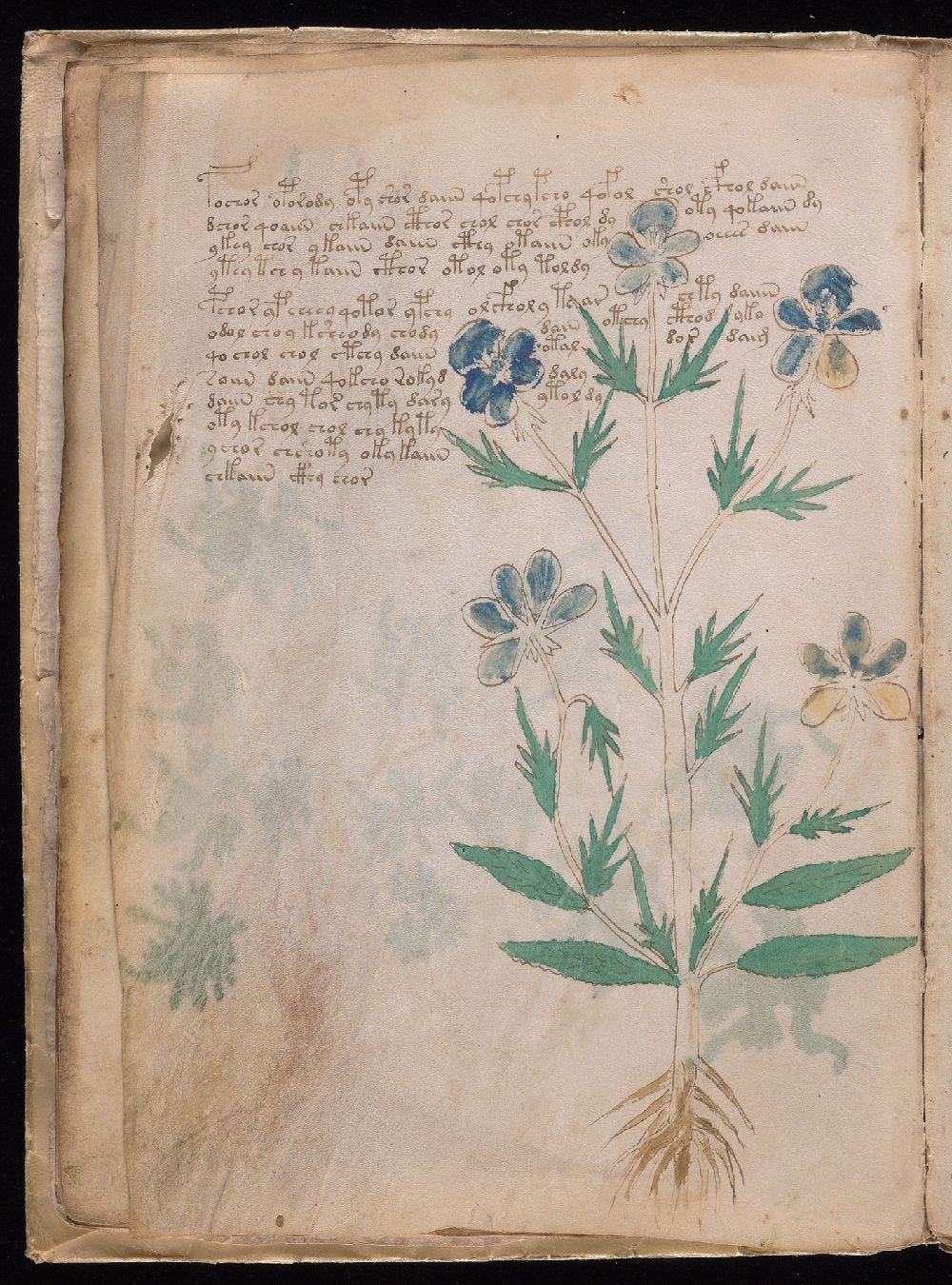
f. 9v · A pansy? Blue flowers with yellow centres. It has been compared to the wild pansy (Viola tricolor). It is a comparison, not a firm identification.
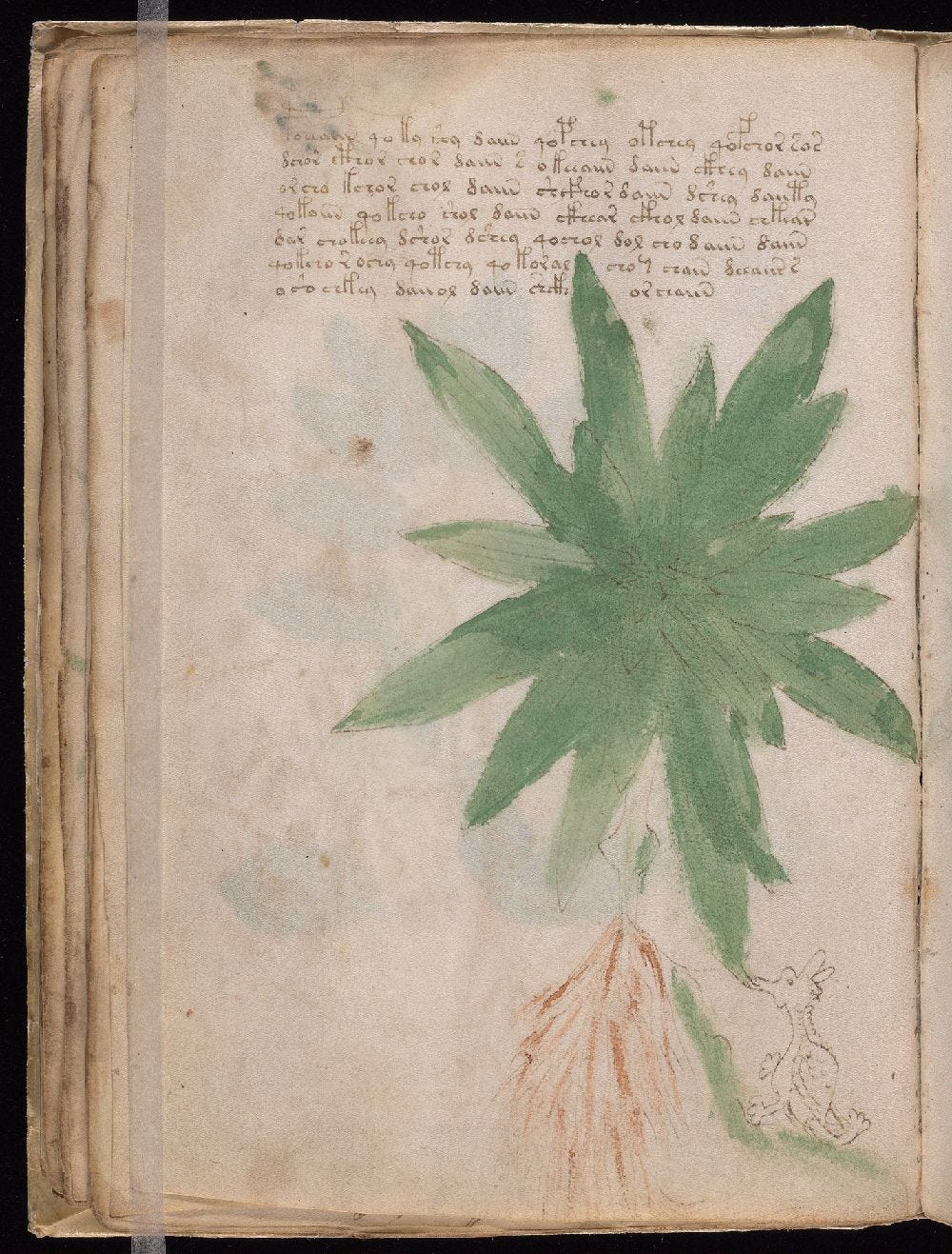
f. 25v · The plant and the creature. A star of green leaves and, by the root, a small animal with legs and a tail, somewhere between a lizard and a dragon. Almost none of the book’s plants has an animal beside it.
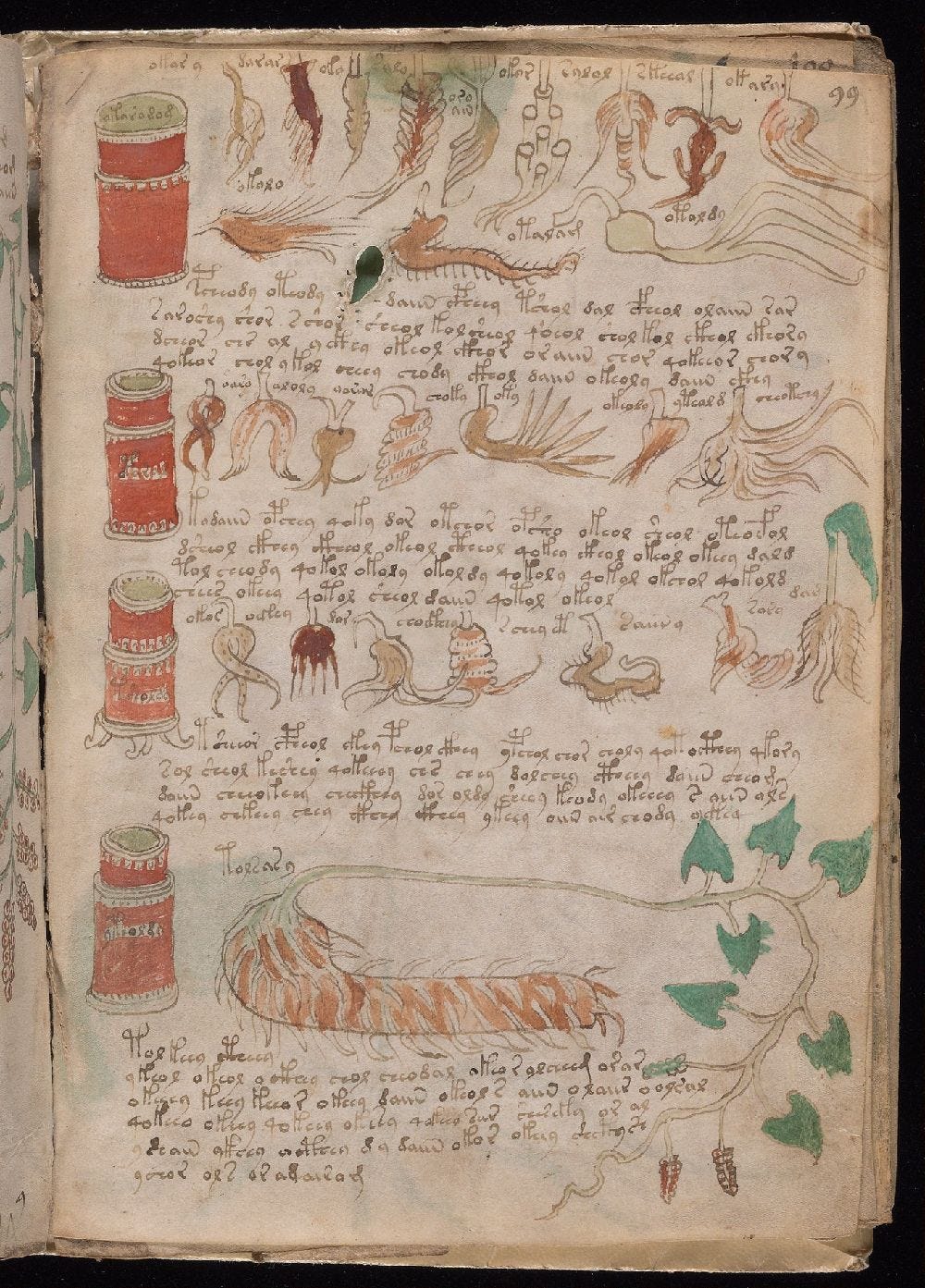
f. 99r · An apothecary’s inventory. Painted jars and, around them, loose roots and leaves, each with a short word beside it, like a label. It looks like a catalogue of ingredients, though no one has ever read a single label.
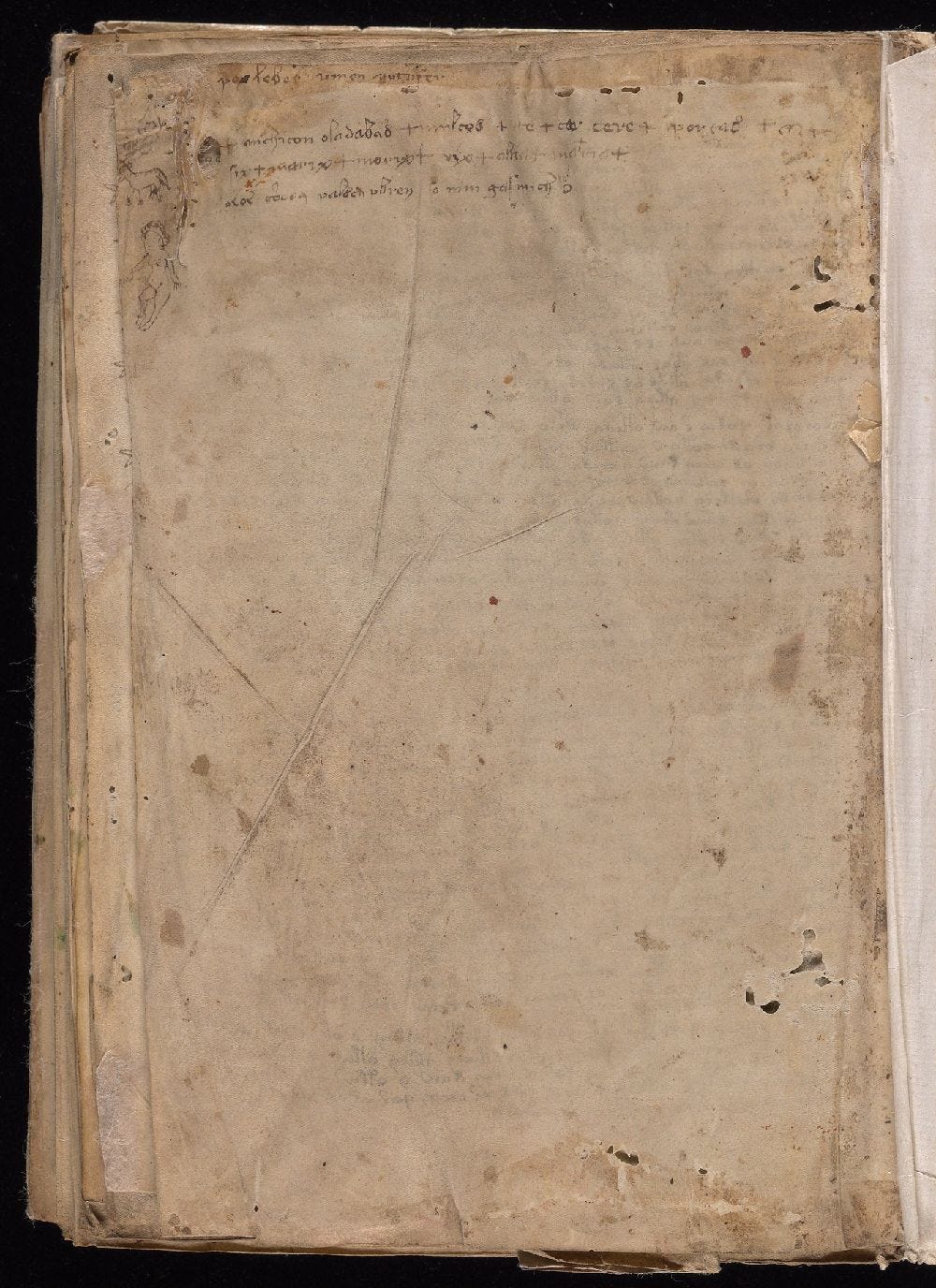
f. 116v · The last page. The manuscript ends with an almost empty leaf. At the top, four lines in another hand, in an alphabet we can read. Readings in Latin and in German have been proposed («so nim gaismich»: «take goat’s milk»), but there is no agreement on what they say.